The history of the sonnet begins in 13th-century Italy, where a compact form of poetry developed into one of the world’s most enduring literary traditions. Originally associated with love, argument and personal reflection, the sonnet later became a favourite form for poets writing about religion, politics, identity, grief and the passage of time.
For many readers, the word sonnet immediately suggests William Shakespeare. His 154 published sonnets helped establish a form that remains widely recognised, but Shakespeare did not invent it. By the time he began writing, the sonnet already had a history stretching back more than three centuries.
Its journey from medieval Sicily through Renaissance Europe and into literary cultures around the world involved changes in language, rhyme, rhythm and subject matter.
Even the familiar rule that a sonnet contains 14 lines has exceptions, as poets repeatedly adapted the form to suit new ideas.
Understanding where sonnets came from, how they developed and why their structure matters reveals something remarkable about poetry: a small number of lines can contain an entire argument, an emotional conflict or a profound change in perspective.
What Is A Sonnet?
A sonnet is traditionally a poem of 14 lines, usually organised according to a recognisable rhyme scheme and a carefully developed pattern of thought.
The name comes from the Italian word sonetto, commonly translated as “little song” or “little sound”.
Early sonnets frequently explored love, admiration and longing. However, the form developed to accommodate an enormous range of subjects.
What distinguishes a sonnet is not simply its length.
Many sonnets establish an idea, develop a tension or pose a question before changing direction towards an answer, qualification or unexpected conclusion.
This movement of thought helps explain why the form has remained appealing to poets for centuries.
Does Every Sonnet Have 14 Lines?
Fourteen lines form the standard pattern.
Classical Italian and English sonnets generally follow this convention, although their internal arrangements differ.
Some later poets deliberately shortened, extended or loosened the traditional structure.
For example, Gerard Manley Hopkins developed the curtal sonnet, a compressed form with ten and a half lines, while other poets created longer poems that retain aspects of sonnet organisation.
Many contemporary sonnets also abandon traditional rhyme or regular metre.
Consequently, the familiar 14-line definition remains a useful starting point rather than an absolute rule covering every poem described as a sonnet.
Where Did The Sonnet Originate?
The sonnet emerged in Sicily during the 13th century, within the literary culture surrounding the court of Frederick II, Holy Roman Emperor and King of Sicily.
Frederick’s court brought together people from different linguistic, cultural and intellectual traditions.
Poetry flourished in this environment, particularly among educated officials and writers who experimented with the language of love.
The poets associated with this movement became known as the Sicilian School.
Their work contributed to the development of literary writing in Italian vernacular languages at a time when Latin remained important in formal scholarship and administration.
Who Invented The Sonnet?
The person most commonly credited with inventing the sonnet is Giacomo da Lentini, a poet and legal official associated with Frederick II’s court.
He was active during the first half of the 13th century, with the sonnet’s development generally placed around the 1230s.
His surviving poems demonstrate the emergence of a compact lyric form capable of presenting emotion and intellectual argument within a limited space.
However, calling him the inventor does not mean every element of the sonnet appeared without precedent.
Medieval poets already had access to established traditions of lyric poetry, song and elaborate rhetorical composition.
The achievement associated with Giacomo was the creation or consolidation of a distinctive form that later writers adopted and transformed.
Why A Legal Official Might Have Invented A Love Poem
Giacomo’s work as a legal official offers an interesting perspective on the sonnet’s structure.
A legal argument often involves presenting a position, considering a difficulty and developing a response.
Sonnets can operate in a similar way.
An opening proposition may give way to a counterargument, a doubt or a revised understanding.
This resemblance does not prove that legal training directly caused the invention of the sonnet, but it helps explain why the form became especially suitable for persuasion and debate.
Modern scholarship also emphasises that early Sicilian and Tuscan sonnets sometimes formed exchanges between different poets.
They were not always isolated confessions of private emotion.
The First Sonnets Were Not Simply Love Letters
Romantic love was central to the earliest sonnet tradition, but the poems were often more intellectually complex than simple declarations of affection.
Writers examined desire, absence, uncertainty, loyalty and the emotional consequences of loving someone who remained unavailable.
A poet might present a question about love in one sonnet and receive a response from another writer.
Such exchanges allowed poets to demonstrate verbal skill, challenge one another and explore competing interpretations of an experience.
Sonnets As Poetic Conversations
The medieval tradition of poetic debate included exchanges known as tenzoni.
In these exchanges, poets could respond to one another through related compositions.
Sonnets offered a useful structure for this kind of dialogue because their limited length encouraged concentrated arguments.
This is an easily overlooked part of the form’s history.
The sonnet did not develop solely as a private expression of longing. It also belonged to a social world in which educated writers tested ideas, performed literary skill and argued through poetry.
Its connection with both emotion and reasoning remained important long after the Sicilian School disappeared.
How The Sonnet Spread Through Italy
The form travelled from Sicily into other parts of the Italian peninsula during the 13th century.
Poets working in Tuscany and elsewhere adapted its language, structure and themes.
Writers such as Guittone d’Arezzo and Guido Cavalcanti helped develop the sonnet as a vehicle for intricate thought and emotional expression.
Dante Alighieri also wrote sonnets, incorporating lyric poetry into his exploration of love, memory and spiritual development.
Dante And The Sonnet Tradition
Although best known internationally for The Divine Comedy, he also played an important role in the development of Italian love poetry through his earlier writing.
In La Vita Nuova, he combined prose with poems, including sonnets, to explore his experience of love and its spiritual meaning.
The mixture of narrative explanation and lyric poetry gave individual sonnets a larger context.
Readers could follow not only a particular emotional moment but also the development of the speaker’s understanding.
This approach helped establish the possibility of connecting multiple sonnets within a wider literary work.
From Individual Poems To Sonnet Sequences
A sonnet can stand alone, but poets also began arranging them in related groups.
A sequence could develop a continuing story, explore different aspects of love or present changes in the speaker’s thoughts over time.
Individual poems retained their formal structure while contributing to a larger design.
This combination of independence and continuity eventually became central to several famous Renaissance collections.
Francesco Petrarch And The Rise Of The Italian Sonnet
Francesco Petrarca, usually known in English as Petrarch, was born in 1304 and became one of the most influential poets of the Italian Renaissance.
Although he did not invent the sonnet, his work helped establish it as a major literary form.
His collection commonly known as the Canzoniere contains 366 poems, most of them sonnets.
The collection explores love, memory, spiritual conflict and the passage of time.
Its central female figure is Laura, traditionally understood as the beloved whose presence and absence shape much of the speaker’s emotional world.
Was Laura A Real Person?
The historical identity of Laura remains uncertain.
Petrarch presented her as the object of profound admiration, but scholars have debated how closely the poetic figure corresponds to a particular historical woman.
The uncertainty matters because the Canzoniere is not simply a factual diary.
It is a carefully developed literary work whose speaker repeatedly examines desire, regret, mortality and spiritual responsibility.
Treating every poem as a literal record of Petrarch’s personal life would overlook its artistic construction.
Why Petrarch Became So Influential
Petrarch’s success helped establish conventions that later European poets repeatedly borrowed.
These included the distant or unattainable beloved, the conflict between desire and reason, the idealisation of beauty and the suffering of the lover.
Such conventions became known as Petrarchism.
Petrarch’s influence extended far beyond Italy.
Poets adapted his imagery and rhetorical patterns into different languages, sometimes following his example closely and sometimes challenging its assumptions.
The tradition became so familiar that later writers could also parody its exaggerated descriptions of beauty and romantic suffering.
What Is A Petrarchan Sonnet?
The Petrarchan sonnet, also called the Italian sonnet, traditionally divides its 14 lines into two parts.
The first consists of eight lines, known as an octave.
The second consists of six lines, known as a sestet.
The octave commonly follows the rhyme scheme:
ABBA ABBA
The sestet allows greater variation. Two familiar patterns are:
CDE CDE
CDC DCD
Other arrangements occur, and historical poets did not always follow one rigid formula.
How The Octave And Sestet Work Together
The octave commonly introduces a situation, question, emotional difficulty or argument.
The sestet then responds, complicates the idea or shifts the reader towards another perspective.
For example, a poem might begin by describing the pain of separation.
After the eighth line, the speaker may reconsider whether absence has destroyed love or strengthened it.
The crucial feature is the relationship between the two movements of thought.
Their contrast gives the sonnet its dramatic and intellectual force.
What Is The Volta?
The shift in thought within a sonnet is called the volta, an Italian word meaning “turn”.
In a traditional Petrarchan sonnet, the turn often occurs between the eighth and ninth lines.
It may signal a change from doubt to hope, admiration to criticism, or description to reflection.
However, not every sonnet places its main turn at exactly the same point.
Some contain more than one change in perspective.
Others develop their argument gradually without a sharply marked division.
The volta is best understood as a powerful technique rather than a mechanical requirement.
How The Sonnet Spread Across Renaissance Europe
The Italian sonnet became influential in other European literary cultures during the Renaissance.
Writers in Spain, Portugal, France and England adopted and adapted it.
Each language presented different opportunities and difficulties for rhyme, rhythm and poetic expression.
Translations and imitations helped circulate the form, while poets introduced subjects drawn from their own societies and literary traditions.
Sonnets In Spain And Portugal
Spanish poets, including Garcilaso de la Vega, helped establish Italian verse forms within Spanish Renaissance poetry.
Garcilaso’s work contributed to the popularity of the 11-syllable line and other techniques associated with Italian literary influence.
In Portuguese literature, Luís de Camões became particularly celebrated for sonnets exploring love, uncertainty, suffering and human experience.
The form’s popularity in both languages demonstrated that its intellectual and emotional possibilities did not depend on Italian alone.
Sonnets In France
French Renaissance poets also embraced the sonnet.
Pierre de Ronsard and Joachim du Bellay were among the writers associated with the literary circle known as La Pléiade.
They sought to demonstrate that French could support ambitious poetry comparable with admired classical and Italian models.
The sonnet offered an opportunity to combine technical skill with expressions of love, mortality and personal reflection.
As French poets developed their own preferences for rhyme and metre, the form acquired further variations.
The sonnet had become an international literary tradition well before Shakespeare published his famous collection.
Who Introduced The Sonnet Into English?
Sir Thomas Wyatt, an English courtier and poet who lived from around 1503 to 1542, is traditionally credited with introducing the Italian sonnet into English literary practice.
Wyatt encountered continental European culture through his courtly and diplomatic life.
He translated and adapted Petrarchan material while also composing his own poems.
His sonnets retained important features of the Italian tradition but adapted its language and rhythm for English.
Thomas Wyatt And The English Language
Italian offers a relatively rich range of words with similar endings.
English presents different challenges for poets attempting elaborate patterns of rhyme.
Wyatt experimented with the Italian octave and various endings, helping establish ways of writing sonnets in English.
His poetry often reveals tensions between courtly love, personal freedom and political power.
One of his best-known works, Whoso List to Hunt, uses the image of a deer that cannot be possessed.
The poem is frequently discussed in relation to Petrarchan love conventions and the dangers of courtly desire.
Although readers sometimes associate its imagery with Henry VIII’s court, its precise historical references remain open to interpretation.
Tottel’s Miscellany And The Popularisation Of Sonnets
Many early English sonnets circulated in manuscript before reaching a wider printed audience.
In 1557, printer Richard Tottel published an anthology now commonly known as Tottel’s Miscellany.
Its title was Songes and Sonettes.
The collection included poetry by Wyatt, Henry Howard, Earl of Surrey, and other writers.
It helped make earlier Tudor poetry available to a wider readership and became an important landmark in English literary publishing.
This was not the moment the sonnet was invented in English, but the anthology played a major role in preserving and popularising the form.
Was There An English Sonnet Before Thomas Wyatt?
A remarkable piece of manuscript research has complicated the conventional account of English sonnet history.
The usual explanation credits Wyatt with introducing the form during the early 16th century.
However, literary scholar Daniel Sawyer has drawn attention to a much earlier 14-line poem by John Metham.
Metham wrote the verse romance Amoryus and Cleopes in East Anglia, England, around 1448-1449.
Within that work, a short lyric follows the rhyme pattern:
ABAB CDCD EFEF GG
This is the pattern later associated with the Shakespearean sonnet.
John Metham’s Accidental Sonnet
The intriguing point is that Metham probably did not know he had written something resembling a sonnet.
There is no established evidence that he knew Italian or had access to Italian sonnet literature.
He was working within medieval English poetic traditions, and the familiar rhyme pattern may have emerged independently.
The poem therefore raises a difficult question.
Should historians classify a work as a sonnet because its structure matches a known form, or because its writer knowingly participated in the sonnet tradition?
Does This Mean Wyatt Was Not The First?
Metham’s poem predates Wyatt’s work by decades, but the distinction requires care.
Its existence does not establish that Metham introduced the Italian sonnet into English literature.
Nor does it demonstrate that Wyatt or later Tudor poets knew of his experiment.
Wyatt remains central to the documented adoption and development of the Italian sonnet tradition in English.
Metham’s earlier poem instead shows that literary forms can sometimes emerge independently through similar structural possibilities.
This less familiar discovery reminds us that literary history is not always as straightforward as assigning an invention to one individual.
How Henry Howard Changed The English Sonnet
Henry Howard, Earl of Surrey, was another important Tudor poet associated with adapting Italian forms.
He helped develop the structure now usually called the Shakespearean or English sonnet.
Rather than arranging the poem as an octave followed by a sestet, this form divides it into three four-line units and a final two-line unit.
These are known as three quatrains and a concluding couplet.
Its standard rhyme scheme is:
ABAB CDCD EFEF GG
Why The English Form Was Different
The English sonnet allows each quatrain to use a new pair of rhymes.
This can make the poem more manageable in a language with different rhyming possibilities from Italian.
It also creates a distinctive pattern of development.
The first quatrain might introduce an argument.
The second could extend or challenge it.
The third might deepen the difficulty before the final couplet offers a conclusion or surprise.
The couplet can become especially memorable because its two rhyming lines provide a strong sense of closure.
Why It Is Called Shakespearean Rather Than Surrey’s Sonnet
Surrey helped establish the form before Shakespeare’s literary career.
However, Shakespeare later used it with such skill and influence that his name became closely attached to the pattern.
This does not mean Shakespeare invented the rhyme scheme.
It reflects the enormous influence of his sonnets on later literary culture.
The difference between creating a form and making it famous is an important part of the sonnet’s history.
The Elizabethan Sonnet Craze
By the late 16th century, sonnet sequences had become fashionable in England.
Writers used collections of linked poems to examine love, admiration, rivalry and disappointment.
The sonnet became associated with literary sophistication and the ability to express emotional complexity within strict limits.
Sir Philip Sidney And Astrophil And Stella
Sir Philip Sidney wrote one of the most influential English sonnet sequences, Astrophil and Stella.
Although composed earlier, it was first published in 1591, after Sidney’s death.
The sequence contains 108 sonnets and 11 songs.
Its speaker struggles with desire, admiration, duty and the limits of romantic fulfilment.
Rather than presenting love as a simple feeling, Sidney explores how it can conflict with judgement, reputation and personal responsibility.
The sequence influenced other English writers and contributed to the popularity of related collections.
Edmund Spenser And Amoretti
Edmund Spenser published his sonnet sequence Amoretti in 1595.
The collection is associated with his courtship of Elizabeth Boyle, whom he married.
Spenser used a distinctive sonnet structure that linked the quatrains through repeating rhymes.
His work illustrates how a familiar poetic form could become the basis for further technical experimentation.
The sequence also differs from many Petrarchan examples by moving towards a relationship that reaches marriage rather than remaining permanently unfulfilled.
Shakespeare’s Sonnets And Their Lasting Influence
William Shakespeare became the most famous writer of English sonnets.
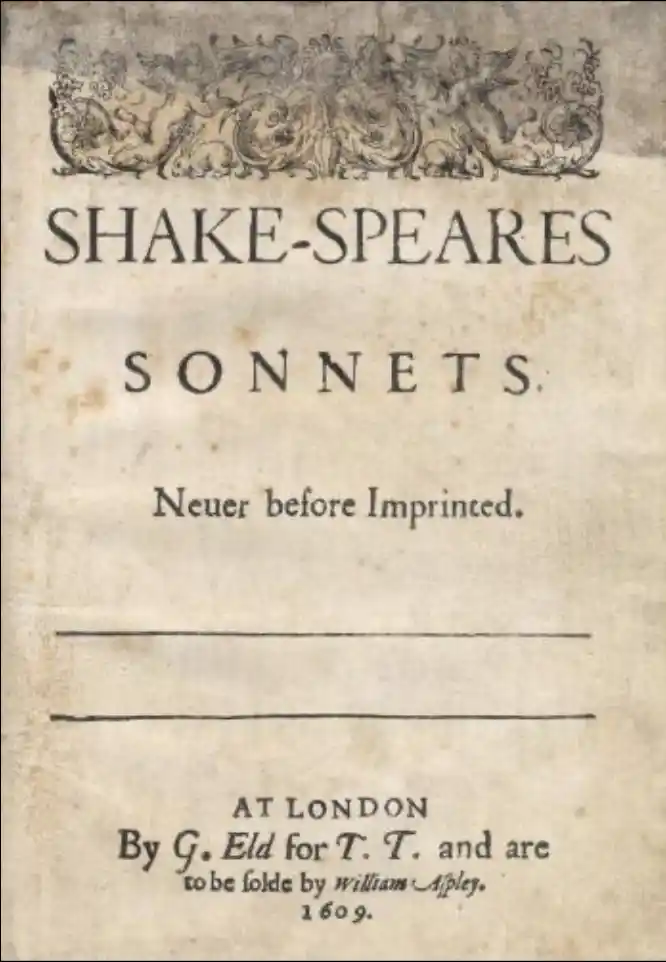
His collection of 154 sonnets appeared in print in 1609, published by Thomas Thorpe.
The poems address love, beauty, mortality, jealousy, time, artistic immortality and the difficulties of human relationships.
Although they have sometimes been read as a continuous autobiographical confession, the identities of their speakers and addressees remain subjects of interpretation.
Did Shakespeare Invent The Shakespearean Sonnet?
No.
The English form existed before Shakespeare.
His achievement lay in the complexity, emotional force and imaginative possibilities he brought to the established structure.
He frequently used the final couplet to reconsider, intensify or undermine arguments developed in the preceding lines.
The result could be strikingly intimate, humorous, bitter or philosophical.
What Do Shakespeare’s Sonnets Discuss?
Several poems concern the passage of time and the fear that beauty will disappear.
Others explore the possibility that poetry can preserve a person’s memory.
Love may appear generous, jealous, insecure or contradictory.
Some sonnets challenge idealised descriptions of romantic beauty rather than repeating them.
Sonnet 130, for example, questions exaggerated comparisons between a beloved person and supposedly perfect natural objects.
Shakespeare uses the traditional language of love poetry while also exposing its limitations.
The 1609 Publication Was Not The First Appearance Of Every Sonnet
The 1609 collection remains the principal early printed source for Shakespeare’s sonnet sequence.
However, Sonnets 138 and 144 had already appeared in a 1599 collection titled The Passionate Pilgrim.
The later publication of the sonnets also involved editorial changes.
In 1640, John Benson issued an edition that altered their presentation, including their ordering and the addition of titles.
These details matter because a famous literary collection can have a complicated history of printing and editing.
The text familiar to modern readers has not always circulated in exactly the same arrangement.
Women Writers And The Sonnet Tradition
Early accounts of sonnet history often concentrate on male poets addressing idealised women.
However, women also played important roles in developing the form and challenging its conventional perspectives.
The opportunity to publish poetry was shaped by social expectations, education and access to literary networks.
Women who wrote sonnets could use familiar structures while exploring different experiences of love, identity and authority.
Lady Mary Wroth And Pamphilia To Amphilanthus
Lady Mary Wroth published Pamphilia to Amphilanthus in 1621, as part of her prose romance The Countess of Montgomery’s Urania.
It is recognised as the first published sonnet sequence by an English woman.
The printed sequence contains 83 sonnets and 20 songs.
Its central figure, Pamphilia, examines love from a female perspective.
Wroth did not simply reverse the traditional roles of the pursuing male lover and distant female beloved.
Instead, she explored conflicting emotions, constancy, desire and self-determination.
An earlier manuscript version survives in Wroth’s own handwriting, offering valuable evidence of how she revised and reorganised the work.
This makes her contribution important both for literary history and for understanding the process of composition.
Elizabeth Barrett Browning And Sonnets From The Portuguese
During the 19th century, Elizabeth Barrett Browning transformed the love sonnet through her sequence Sonnets from the Portuguese.
The poems were published in 1850 and explore love through an intimate, emotionally complex voice.
They are closely associated with her relationship with fellow poet Robert Browning.
The title does not mean that Barrett Browning merely translated an existing Portuguese collection.
It helped present highly personal poems through a degree of literary distance.
The sequence illustrates how women writers reshaped the sonnet to express experiences that earlier conventions had often presented primarily through male speakers.
Sonnets Beyond Romantic Love
Although love helped establish the sonnet’s popularity, poets increasingly recognised its suitability for other subjects.
The form’s limited space encouraged concentrated reflection on questions that were not always easy to resolve.
Its structure could support religious meditation, political argument, personal grief or criticism of society.
John Donne And Religious Sonnets
John Donne used sonnets to explore spiritual doubt, sin, salvation and the relationship between humanity and God.
His Holy Sonnets demonstrate how the form could accommodate intense religious questioning.
Rather than addressing an unattainable beloved, the speaker might confront guilt, mortality or a crisis of faith.
The sonnet became a vehicle for spiritual argument as well as romantic longing.
John Milton And Political Freedom
John Milton extended the sonnet’s range during the 17th century.
His poems addressed religious concerns, public events, political principles and personal experiences.
Some of his sonnets loosened the separation between octave and sestet, allowing the argument to move across the traditional dividing line.
His work helped establish the sonnet as a serious form for public and political expression.
Wordsworth And The Sonnet’s Revival
William Wordsworth was among the Romantic poets who renewed interest in the sonnet during the late 18th and early 19th centuries.
His work included poems about nature, politics, spiritual experience and the challenges of modern life.
The sonnet’s fixed limits could encourage discipline rather than restrict expression.
For Wordsworth, the form offered an opportunity to develop an idea through concentrated language and carefully shaped thought.
The Sonnet Around The World
The sonnet’s development did not end with English Renaissance poetry.
Its influence spread through translation, education, literary exchange and the international circulation of European poetic traditions.
Writers in different countries adapted its structures to their own languages and cultural concerns.
The form’s history also reflects the unequal conditions under which literature travelled, including colonial education and the influence of European literary institutions.
Yet poets did more than copy inherited patterns.
They transformed the sonnet to express experiences that earlier European writers had not represented.
The Sonnet In German-Language Poetry
German-language poets developed their own sonnet traditions, using the form for religious, philosophical, political and personal subjects.
Rainer Maria Rilke’s Sonnets to Orpheus, composed in 1922 and first published in 1923, provides an important 20th-century example.
The sequence contains 55 poems divided into two parts.
Rilke used the sonnet tradition to explore art, transformation, mortality and the relationship between human life and song.
His work demonstrates that the sonnet remained open to substantial experimentation beyond its Renaissance origins.
Sonnets In African American Poetry
African American poets used the sonnet to address themes of freedom, identity, injustice and resistance.
The form’s association with established European literary culture could itself become part of a poem’s meaning.
By working within a traditional structure, writers could challenge assumptions about whose experiences belonged in recognised literary forms.
Claude McKay, who was born in Jamaica, became a prominent figure in the Harlem Renaissance.
His poems included sonnets such as America and If We Must Die, addressing racial tension, struggle and resistance.
The use of controlled rhyme and metre did not soften the political force of his writing.
Instead, traditional form could intensify the urgency of the argument.
Modern Sonnets And New Literary Voices
Later poets continued to reshape the sonnet.
Wanda Coleman developed a substantial body of work using the title American Sonnets, while Terrance Hayes explored the form in his collection American Sonnets for My Past and Future Assassin.
Such work shows how poets can engage with the history of a traditional form while questioning the expectations surrounding it.
Contemporary sonnets may use unfamiliar rhythms, altered structures, disrupted rhyme or language drawn from everyday speech.
The sonnet has become a means of responding to tradition as well as participating in it.
The Main Types Of Sonnet Explained
The sonnet is often associated with two principal historical patterns, but several other recognisable forms developed over time.
Petrarchan Or Italian Sonnet
The standard Petrarchan structure contains an octave and a sestet.
The octave usually follows ABBA ABBA.
The sestet permits several combinations, including CDE CDE and CDC DCD.
A turn in thought often occurs between the two parts.
Shakespearean Or English Sonnet
The Shakespearean structure uses three quatrains and a concluding couplet.
Its familiar rhyme pattern is ABAB CDCD EFEF GG.
The final couplet often provides a particularly memorable resolution or reversal.
Spenserian Sonnet
The Spenserian sonnet also uses three quatrains and a couplet, but its rhymes link the quatrains together.
The pattern is:
ABAB BCBC CDCD EE
This arrangement gives the poem a closely connected movement from one section to the next.
Miltonic Sonnet
The Miltonic sonnet generally draws on the Italian pattern but may develop its argument without a clear pause between the eighth and ninth lines.
It also often addresses religious, political or public concerns rather than romantic love.
The term therefore describes a recognisable approach associated with Milton, not simply one additional fixed rhyme scheme.
Curtal Sonnet
Gerard Manley Hopkins developed the curtal sonnet as a shorter variation.
It has ten and a half lines, preserving a compressed relationship between the traditional octave and sestet.
The design shows that poets could retain the proportions and internal logic of a sonnet while altering its familiar length.
What Are Sonnet Sequences And Crowns?
Some poets use the sonnet as part of a larger connected structure.
A sonnet sequence consists of separate poems united by recurring characters, themes, events or an unfolding emotional argument.
The individual poems may stand alone, but their arrangement produces additional meaning.
Petrarch, Sidney, Shakespeare and Barrett Browning all provide important examples of different approaches to sequencing.
What Is A Crown Of Sonnets?
A crown of sonnets joins individual poems through repeated lines.
In a common seven-sonnet arrangement, the final line of one poem becomes the opening line of the next.
The last sonnet closes the circle by returning to the opening line of the first.
This creates a continuous chain of poetic thought.
John Donne’s La Corona is a well-known example.
What Is A Sonnet Redouble?
A sonnet redouble, also called a sonnet redoublé, is a more elaborate form involving 15 linked sonnets.
The first 14 create a connected sequence through repeated lines.
The fifteenth sonnet brings together the repeated linking lines from the preceding 14 poems, following their original order to complete the larger design.
This demanding structure requires a poet to balance the meaning of individual poems with the larger pattern.
It demonstrates how the sonnet’s formal discipline can support considerable technical invention.
Why Do Sonnets Traditionally Use Iambic Pentameter?
English sonnets often use iambic pentameter.
This is a metrical pattern built around five main iambic feet in a line.
An iamb usually consists of an unstressed syllable followed by a stressed syllable.
The result often produces a rhythm that can resemble natural spoken English when handled flexibly.
Does Every Line Need Exactly Ten Syllables?
A regular line of iambic pentameter often contains ten syllables, but poets frequently vary the pattern.
An extra unstressed syllable, an altered opening rhythm or a deliberately emphasised word may change the sound.
These variations can help express emotion or draw attention to a particular phrase.
A poem should not be judged simply by whether every syllable follows an inflexible mechanical pattern.
English sonnets have long combined formal expectations with expressive freedom.
Are Sonnets In Other Languages Written The Same Way?
Not necessarily.
Different languages have different traditions of metre, stress and syllable counting.
Italian sonnets traditionally use the endecasillabo, an 11-syllable line governed by Italian metrical conventions.
Spanish and Portuguese sonnets have also made extensive use of 11-syllable verse.
The English preference for iambic pentameter is therefore one important tradition among several.
This distinction matters when comparing sonnets written in different languages.
Why Do Poets Continue To Write Sonnets?
The sonnet offers an unusual combination of limitation and possibility.
Fourteen lines provide enough space to develop an argument or emotional movement, but not enough to explore every detail without careful selection.
Poets must decide what matters most.
A sonnet can describe an experience, challenge an assumption, ask a question or change direction unexpectedly.
Its structure encourages attention to the relationship between what comes before and after the central turn.
How Can A Strict Form Encourage Creativity?
Formal restrictions may initially seem to limit expression.
However, they can also encourage unexpected choices of language and imagery.
A poet searching for a rhyme may discover a new connection between ideas.
The demand for a turn can encourage a speaker to reconsider an earlier claim.
A concluding couplet may produce a surprise that changes how readers understand the entire poem.
These possibilities help explain why writers continue to return to the sonnet even when free verse is widely available.
Can A Modern Sonnet Be Written Without Rhyme?
Yes.
Some contemporary poems preserve the traditional length or movement of thought while abandoning regular rhyme.
Others use the name sonnet to engage with the form’s historical associations, even when their structures differ substantially.
Readers may disagree about how far a poem can depart from tradition and still qualify as a sonnet.
That disagreement is itself part of the form’s continuing history.
The sonnet remains recognisable not because it has never changed, but because poets have repeatedly found new ways to work with and against its conventions.
Common Misconceptions About Sonnets
Several assumptions about the form deserve correction.
Shakespeare Invented Sonnets
The sonnet originated centuries before Shakespeare, with its early development associated with Giacomo da Lentini and the Sicilian School.
Shakespeare became one of its most influential practitioners rather than its inventor.
Every Sonnet Must Be About Romantic Love
Love was an important early subject, but sonnets have also addressed religion, political freedom, injustice, grief, identity and mortality.
Every Sonnet Must Have The Same Rhyme Scheme
Italian, English and Spenserian sonnets follow different patterns, while later poets have introduced further variations.
Every Sonnet Has Exactly 14 Lines
Fourteen lines form the standard pattern, but recognised variations include shorter, longer and experimental forms.
All Sonnets Have The Same Kind Of Turn
The volta can appear in different positions, emerge gradually or be deliberately complicated.
The First English Sonnet Was Certainly Written By Wyatt
Wyatt played a decisive role in establishing the Italian tradition in English, but a 15th-century poem by John Metham independently resembles the later Shakespearean structure.
The historical distinction is more complicated than a single claim of invention.
Why The History Of The Sonnet Still Matters
The sonnet began as an experiment in medieval Italian poetry and became one of the most adaptable forms in literary history.
Its development involved successive generations of writers who preserved, challenged and reshaped inherited conventions.
Giacomo da Lentini helped establish the form.
Petrarch developed its influence across European love poetry.
Wyatt and Surrey adapted it for English, while Shakespeare made one variation internationally famous.
Later poets used sonnets to explore religious belief, personal identity, political injustice and the experience of living in changing societies.
The history also reveals how literary traditions travel between languages and cultures without remaining unchanged.
A sonnet written in medieval Sicily and one composed centuries later in Jamaica, England or the United States may share a recognisable structure while expressing very different experiences.
The Lasting History Of The Sonnet
The history of the sonnet is the story of a poetic form that has repeatedly reinvented itself.
From its origins at Frederick II’s Sicilian court, the sonnet spread through Italy and Renaissance Europe before developing into new traditions across the world.
Its basic structure provided a framework for writers to explore love, belief, politics, memory and human conflict.
The familiar 14-line pattern remains important, but the sonnet’s lasting power comes from more than a fixed number of lines or a particular rhyme scheme.
Its greatest strength is the ability to make a thought change direction within a small space, allowing poets to question, argue, remember and reconsider.
That flexibility explains why a form developed in the Middle Ages continues to inspire new writing.
Discuss The History Of The Sonnet
Do you prefer the traditional 14-line structure or the freedom of modern sonnets? Is Shakespeare’s version more memorable than the Italian form, or does the Petrarchan structure offer greater possibilities?
Share your thoughts in the Songs And Poems Forum and join the discussion about poetry, form and literary traditions.
Sources And Further Reading
- Cambridge University Press – The Cambridge Companion to the Sonnet — Scholarly introduction to the sonnet’s Sicilian origins, its early connection with argument and dialogue, and its international development.
- Academy of American Poets – Sonnet — Authoritative explanation of the Petrarchan, Shakespearean and other sonnet forms, including the volta, metre and sonnet sequences.
- University of Oxford – The Mystery of the First English Sonnet — Research into John Metham’s 15th-century poem and the distinction between structural resemblance and a documented sonnet tradition.
- Folger Shakespeare Library – Shakespeare’s Sonnets — The historical publication of Shakespeare’s 154 sonnets, earlier printed examples and later editorial changes.
- Poetry Foundation – Lady Mary Wroth — Detailed account of Wroth’s sonnet sequence, its surviving manuscript and its distinctive exploration of female experience.
- Cambridge University Press – A Question of Form — Scholarship on the development and cultural significance of the sonnet in African American poetry.
